


In a busy medical office, many claims leave your system each day without being processed, and some return as unpaid denials rather than payments.
These delays slow the flow of funds for completed work, putting pressure on cash and staff time for small- and mid-size practices in the USA.
Strong denial management in medical billing helps your team understand why payers deny claims, address the root cause, and submit cleaner claims.
How Denials Start in Medical Billing
Many problems that lead to denials in medical billing start with small details that are easy to miss during a busy day. A digit in an ID number may be incorrect, a code may not match the visit, or a plan rule may have changed without notice. When these minor errors repeat, payers start to see a pattern and hold more claims for review.
How to Spot Common Denials in Claims
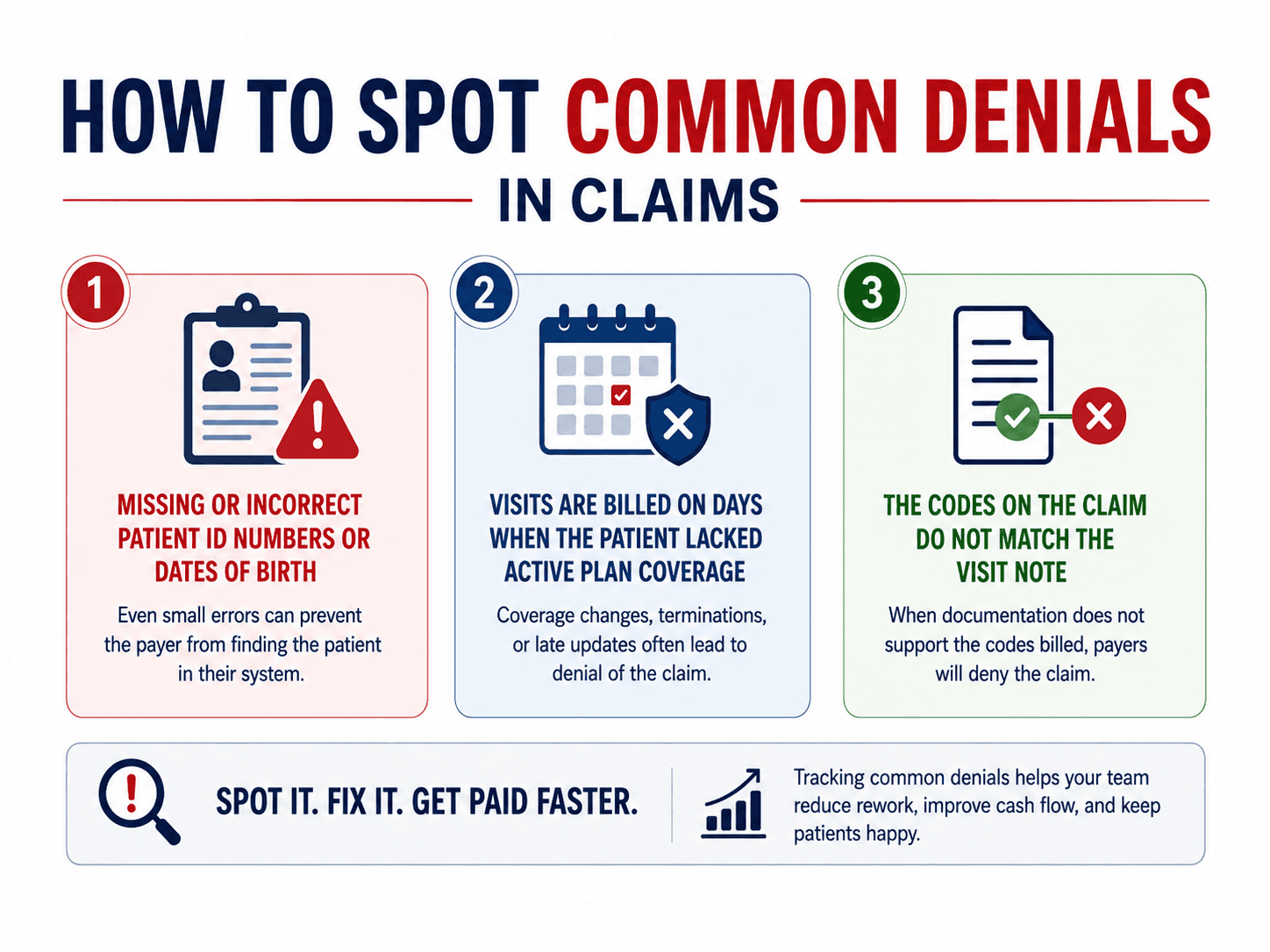
In many practices, the same issues recur, becoming common denials in medical billing that quietly drain time and money. When no one tracks them, the team may feel busy every day but may not realize that a few simple problems are causing most of the extra work.
- Missing or incorrect patient ID numbers or dates of birth on the claim form.
- Visits are billed on days when the patient lacked active plan coverage.
- The codes on the claim do not match the visit note.
Tips to Lower Denial Rates With Medical Coding
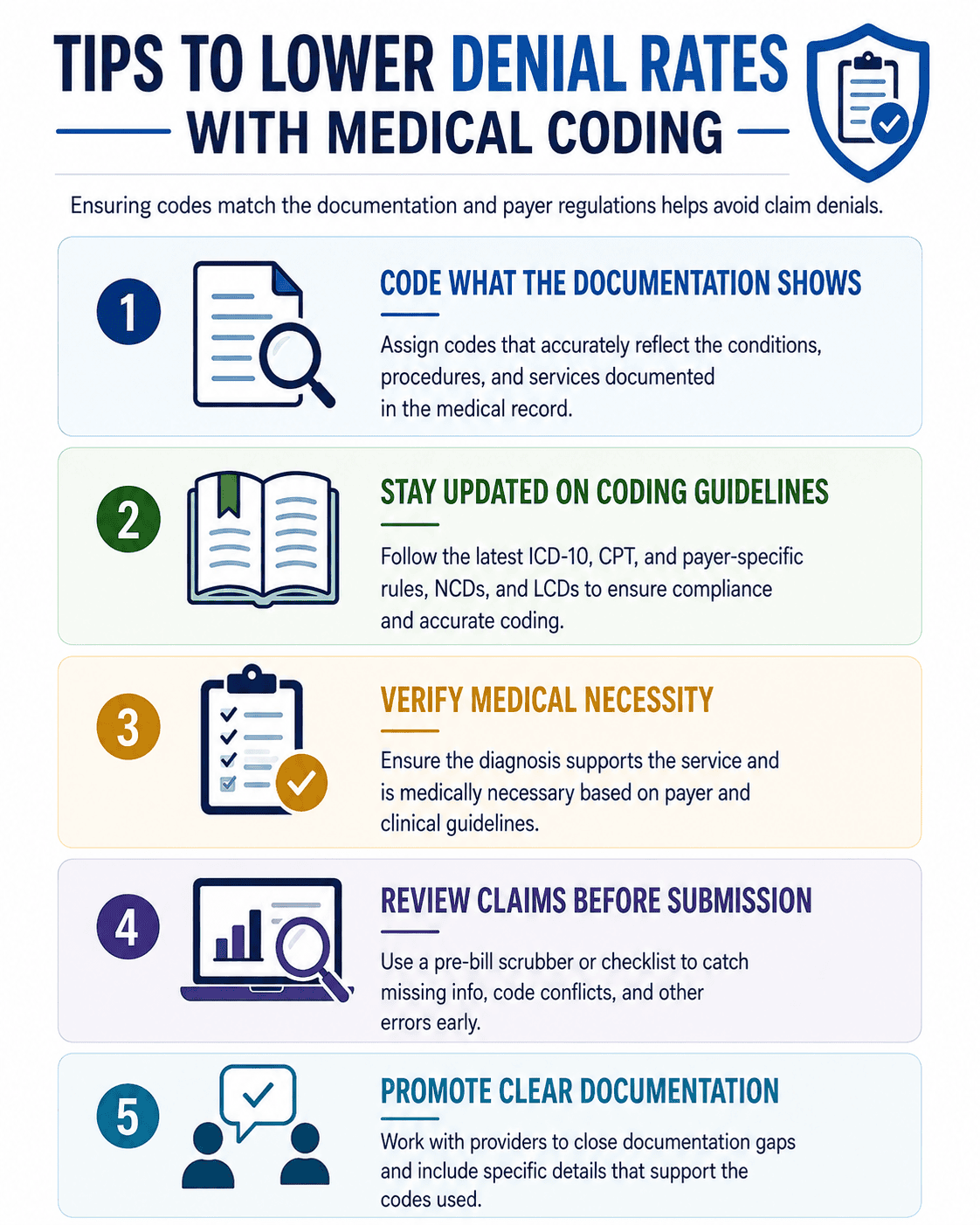
Minor coding discrepancies can cause a clean visit to be denied, despite correct care. Ensuring codes match the documentation and payer regulations helps avoid claim denials.
How Coding Reduces Claim Rejections
Many rejected statements can be linked to codes that do not fully capture the care provided or comply with payer regulations. When your office aims to reduce denial rates in medical coding, ensure all codes align with the note and follow the most recent coding and payer guidelines.
Guide to a Simple Denial Management Workflow
A simple denial management workflow provides everyone in the office with clear steps to follow when a payer returns a claim rather than issuing a payment.
- Follow clear steps when a claim is denied.
- Write down payer, date, and reason for each denial.
- Keep all denied claims in one simple list.
- Fix errors, add notes, and resend or appeal.
- Review the list each month and fix repeat problems.
Frequently Asked Questions (FAQs)
What is causing us to continue to experience the same types of claim problems?
When a practice fails to capture common denials in medical billing, the same small number of errors recur, and claims are returned to payers for the same reasons.
Are minor denials all that we need to be concerned about?
A delay in payment for one visit delays the next, causing cash flow issues and extra work as problems accumulate.
What are some of the ways our team can begin to decrease denials without significant alterations?
The simplest way to lower denial rates in medical coding is to focus on common visit types, ensure codes and notes match, and use a checklist before submitting claims.
At what point does a practice seek external assistance with its billing?
When unpaid claims increase, and staff can’t keep up with payer rule changes or meet patient needs while working on old claims, it may be time to seek help.
How Practice With Ease Helps Clients All Across USA
Practice With Ease partners with medical offices all across the USA, to build practical denial management in medical billing that fits each practice’s size and staff. Our team reviews your data to identify common billing denials, assesses information flow from the front desk to the claim form, and recommends daily staff steps.