


When a payer denies a claim instead of paying, your practice incurs costs and time strain, so learning how to appeal insurance denials is essential to everyday billing. Small practices need a clear path for appealing insurance denials that doesn’t make the process confusing or burdensome for their staff.
When your team follows simple steps to appeal insurance denials, more claims are resolved correctly, fewer visits are written off, and patients can see that your office is working hard to support their care.
How Insurance Denials Start in Medical Billing Claims
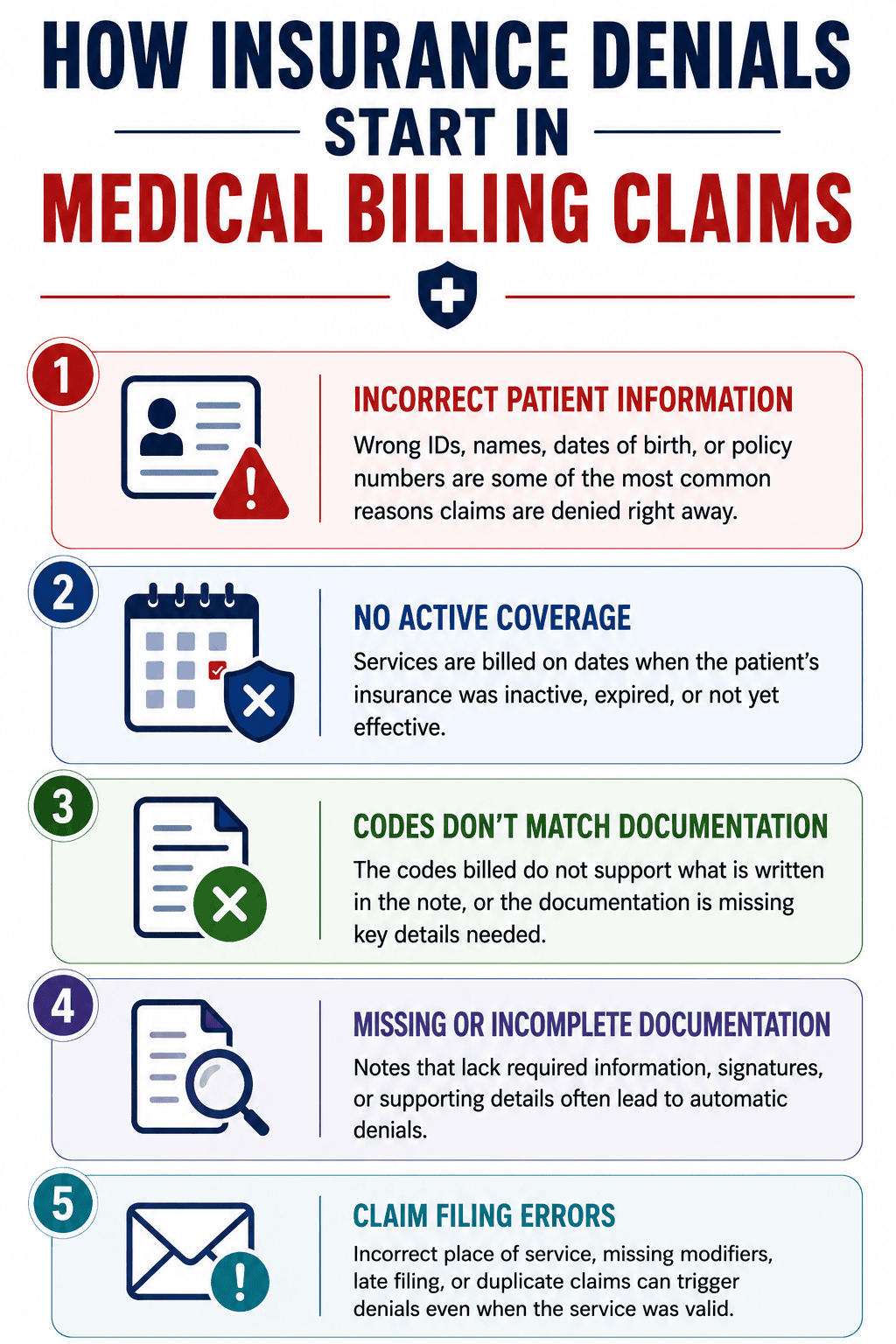
Many claim problems begin with tiny details that are easy to miss on a busy day. When the office is crowded and the staff is moving quickly, these small mistakes can slip through repeatedly.
Small Errors That Lead to Big Denials
Most insurance denials begin with minor issues that are hard to spot when the office is overcrowded, and staff are rushing between phone calls, visits, and billing tasks.
There may be an incorrect digit in the patient ID, a mismatched service code, or a change in a health plan rule that your staff hasn’t noticed. When the same minor error appears across many claims, payers start to hold more bills, send more questions, and issue more denials to your office.
Guidelines for Initiating a Claim Appeal At Your Office

- Before appealing, gather the denial letter, original claim, and visit note.
- Confirm patient and provider details on each page of the claim appeal.
- Verify the accuracy of service dates and location in the claim appeal.
- Ensure the diagnosis and procedure codes match the supporting visit note
- Save copies of all sent items so your office can track the status of each claim appeal.
Do You Have to Appeal an Insurance Claim?
Each payer sets its own time limits, so your staff needs to know how long you have to appeal an insurance claim after a denial arrives.
Some health plans allow only a limited number of days, while others provide more time; the answer is usually printed on the denial letter or in the plan rules. If your team submits an appeal after this deadline, the payer may refuse to review it, and the visit may never be paid, even if the claim was correct.
Tips on Appealing an Insurance Claim with Strong Records
Before your staff begins, it helps to think about how to appeal an insurance claim in a way that keeps the information neat and easy to read.
- Start by appealing an insurance claim by fixing any missing or wrong details on the claim form.
- Include test results or reports that substantiate the service when intending to appeal against an insurance claim.
- The cover letter should use simple, polite language to ensure the reviewer understands the key point you are making.
- Always ensure all pages are in sequence so readers can follow the story.
Frequently Asked Questions (FAQs)
How come we keep on denying the same reasons?
When no one follows patterns, repetitive small errors occur across numerous claims, so payers continue to deny for the same reasons.
Are minor rejections worth working on?
Small denials can translate into substantial revenue loss and lead your billing team to continue generating additional work.
What can we do to start making appeals better without having to change our entire system?
You can begin by selecting a visit type for which you have recently denied claims and updating the intake, coding, and notes to release new claims in a cleaner state.
What should one do if a patient asks whether to sue their health insurance for an unpaid claim?
You can state it’s legal to sue a health insurance company over a denied claim, and your office will handle proper claims and appeals.
Contact Us to Appeal an Insurance Denial in Medical Billing Today!
Practice With Ease collaborates with medical offices to develop an appeal process tailored to each team’s actual workload and capabilities. We review denial reports, analyze information flow from the front desk to claims, and help staff follow simple steps to protect revenue without disrupting daily operations.