

In many medical offices, teams care for patients with long-term health conditions every day, yet they may still wonder what is chronic care management, and how it fits into their daily work.
For small and midsize medical practices, accurate work tracking and billing lead to improved patient health and consistent extra revenue.
Practice With Ease helps local offices set up clear steps so chronic care feels simple for staff and easy to explain to patients.
How This Care Works Between Visits
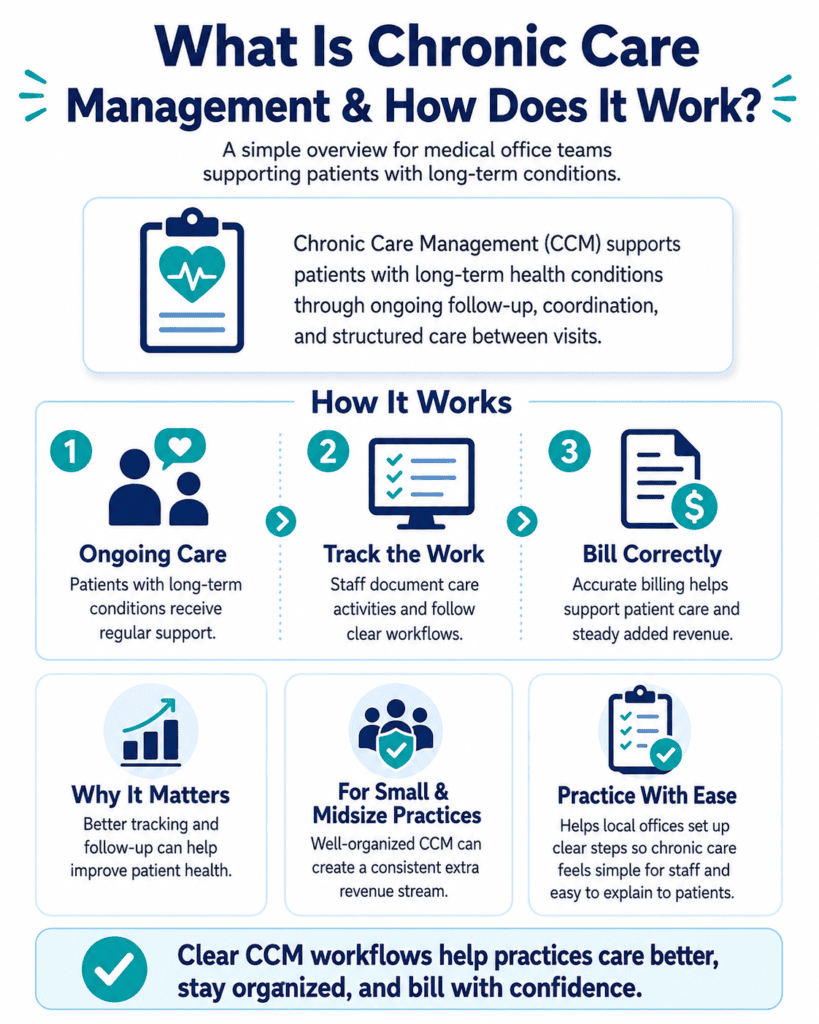
When your staff understands chronic care management in simple terms, they see it as planned support between visits for patients with at least two long-term conditions.
The team builds a care plan, reviews medicines, and schedules regular phone calls or portal messages so the patient never feels alone in managing their health.
Understanding CCM in Medical Billing

In medical billing, CCM (chronic care management) is a way to report between-visit work to payers and be paid for it monthly. The office must first obtain the patient’s consent, then track minutes spent on non-face-to-face care and submit a single claim for that time after the month closes.
Many plans use chronic care management CPT codes to indicate the type of service provided and the complexity of the patient’s needs during that period.
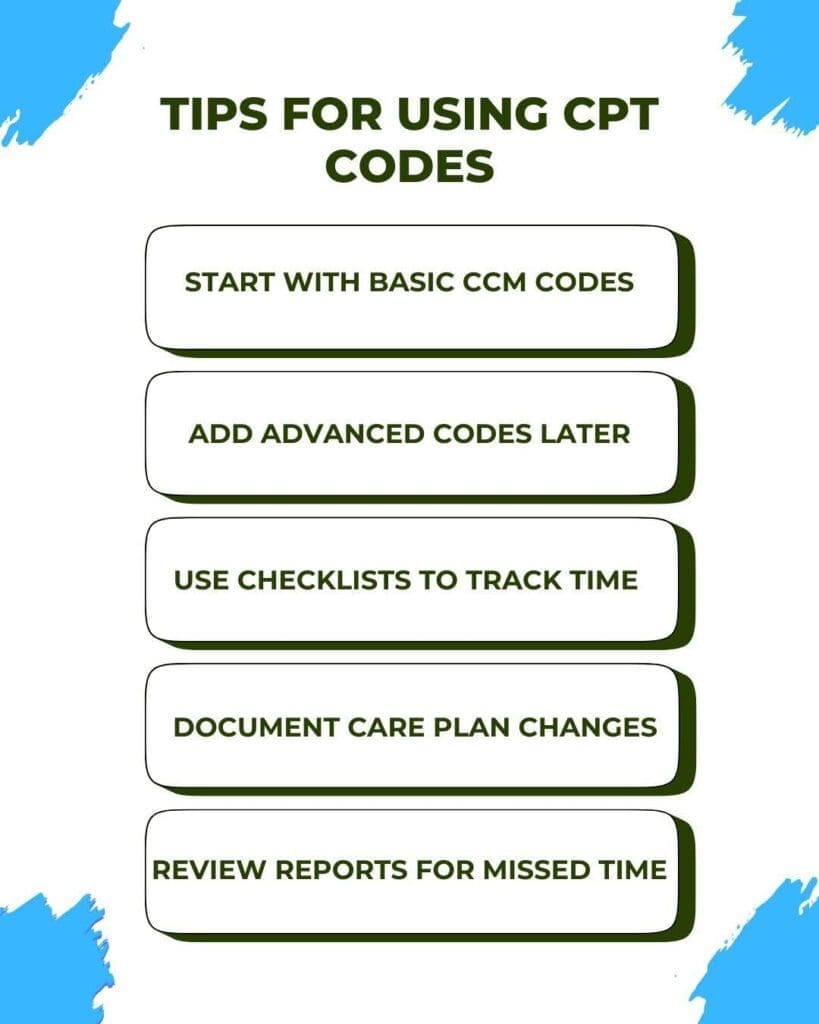
Tips for Using CPT Codes
Many practices want help choosing and using chronic care management cpt codes so they do not miss revenue or create risk.
- Start by using basic CCM codes for patients with simple, long-term needs.
- Add advanced CPT codes later, once your team understands the rules.
- Use checklists to ensure staff consistently record time daily.
- Teach providers to document care plan changes clearly to align billing lines with the medical record.
- Generate reports to identify frequent codes and untracked time areas.
CPT 99490 in Simple Terms for Your Team

Many staff members see 99490 on reports, but are not always sure what it covers. A simple explanation helps everyone understand when to use it and what must be documented.
99490 CPT Code Covers in CCM
The 99490 CPT code describes non-complex chronic care for patients with at least two long-term conditions and a written care plan. It covers 20 or more minutes of clinical staff time per month, directed by a provider, for tasks done when the patient is not in the room.
Documentation of these minutes and activities, including coaching, medication checks, and service arrangements, is required. When this work is clearly recorded, 99490 helps ensure your practice is paid for support that is often provided for free.
Frequently Asked Questions (FAQs)
In simple words, what is chronic care management for our patients?
It is planned to support people with more than one long-term condition between visits, using calls, messages, and shared care plans to help keep daily life safer and easier.
What is CCM in medical billing for our office staff?
It is a way to bill once per month for time spent managing chronic patients outside of visits, using set rules and time limits that payers expect offices to follow.
How do CCM codes and CPT codes fit together?
They are simply different groups of labels that tell payers which type of monthly chronic care was given, how complex it was, and how much time the team spent on that work.
Can the 99490 CPT code description help a small practice?
Yes, when used with good notes and time tracking, it can provide steady extra income for work your staff already does to support high-need patients.
Contact Us Today!
Practice With Ease helps offices develop and oversee programs tailored to their size and patient demographics, removing confusion about CCM in medical billing and concerns about missing essential steps. We guide providers and staff on using chronic care management CPT codes and explain the 99490 CPT code.