

When an outpatient claim leaves your system, the payer sees only codes, dates, and amounts. They do not see the time your team spent helping the patient, checking orders, and entering charges. If those codes do not meet payer rules, payment may be denied or stopped.

Hospital outpatient departments and clinics often use APC Bundling, in which the plan pays a single amount for groups of services rather than separate payments. Practice With Ease helps local teams understand grouped payments, correct posting, explain balances, and identify revenue protection earned.
Why APC Payments Matter in Outpatient Billing
Many billers and front-desk staff learn as they go and never get a clear answer. In simple terms, it is the process by which payers map outpatient visit codes to payment groups for the hospital side of the bill.
Services such as imaging, injections, or same-day procedures are coded on the claim and then classified under established payment rules. Many plans categorise services under (APCs), which associate payment with the visit itself instead of individual line items.
Core Parts of APC Payment Groups
On a hospital outpatient claim, multiple charge lines are often bundled into a single payment group called Ambulatory Payment Classifications (APCs). This group’s similar services are based on weight and standard dollar amounts from payer rules and contracts.
Small items, such as supplies or routine recovery, are included rather than billed separately. Staff should remember this structure to focus less on individual line payments and more on whether the overall group reflects the visit.
Common Problems Related to APC Bundling
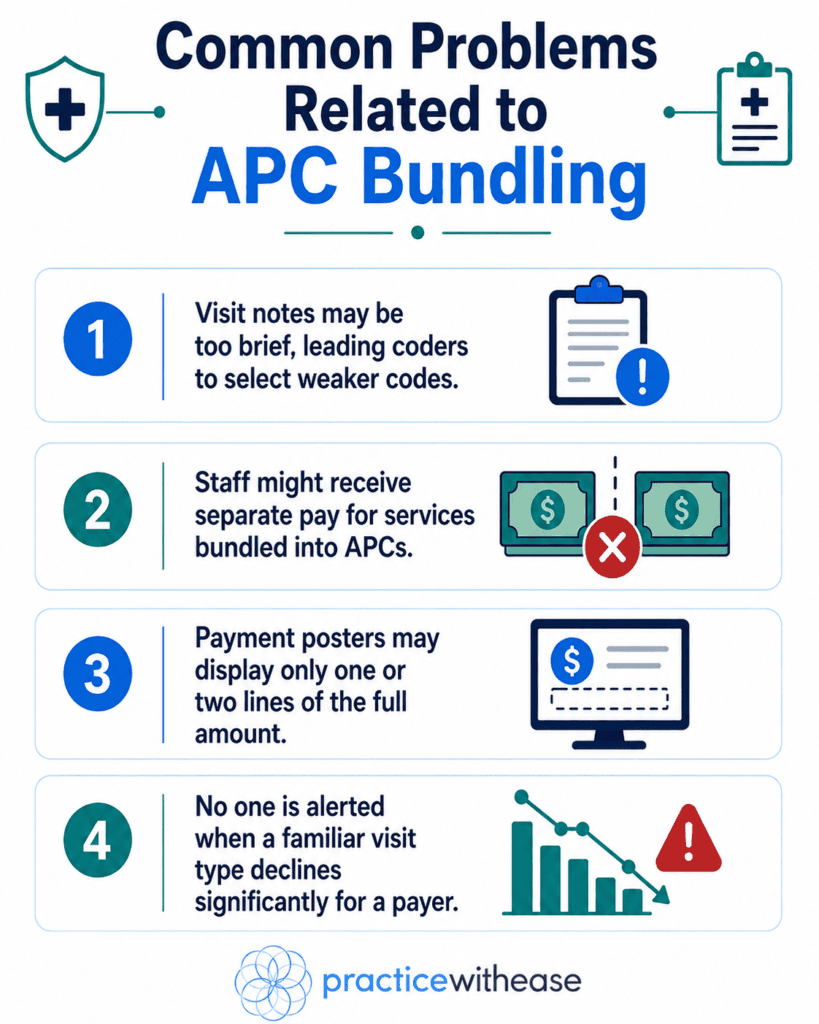
When grouped payments are in place, small gaps in notes, codes, or posting can quietly reduce income. It helps to name the most common trouble spots so your team knows where to look first when a payment seems low or a denial appears.
Practical Tips to Handle APC Workflows
Once your team understands APCs in medical billing, you can build a simple routine around it. A few clear habits can make grouped payments steadier, easier to track, and less stressful for staff.
Simple APC Workflow Practices
Teams that use APC rules daily can maintain control of outpatient revenue through consistent habits. They should maintain a list of common outpatient visit patterns and payment groups to help staff understand what to expect before submitting claims.
Using a checklist, coders verify all main and add-on codes, reducing the risk of visits being misclassified into lower-paying category groups. Regular review sessions in which clinical staff and coders evaluate challenging visits help ensure accurate documentation and ensure the record is assigned to the correct group.
Frequently Asked Questions
What does APC Bundling mean in simple words?
The plan groups outpatient services and issues a single facility payment instead of individual line-item payments, linking the visit to a single payment level.
How does bundling services into Ambulatory Payment Classifications affect our claims?
When bundling services into APCs, related services are grouped into a single payment, helping your team understand what’s included and what can still be paid separately.
What does APC in Medical Billing change for posting and follow-up?
In medical billing, staff must match grouped payments to the correct visit and verify that the total aligns with the codes and notes.
How can our office tell when a grouped payment looks wrong?
Compare payments for the same visit type and payer over time; a significantly lower grouped amount indicates coding, documentation, or payer rule issues.
Contact Us for Best APC Bundling Support
Practice with Ease collaborates with outpatient departments and clinic-based facilities to translate APC bundling rules into daily workflows. Our team reviews claims, visit patterns, and grouped payments to pinpoint where funds may be lost and where training will have the greatest impact.