


When a claim leaves your office, the payer does not see the busy day your team just had. They see dates, codes, and dollar amounts.
If the codes on that claim do not comply with payer rules, payment may be delayed, reduced, or denied. Staff spend more time fixing issues that should have been clear initially.
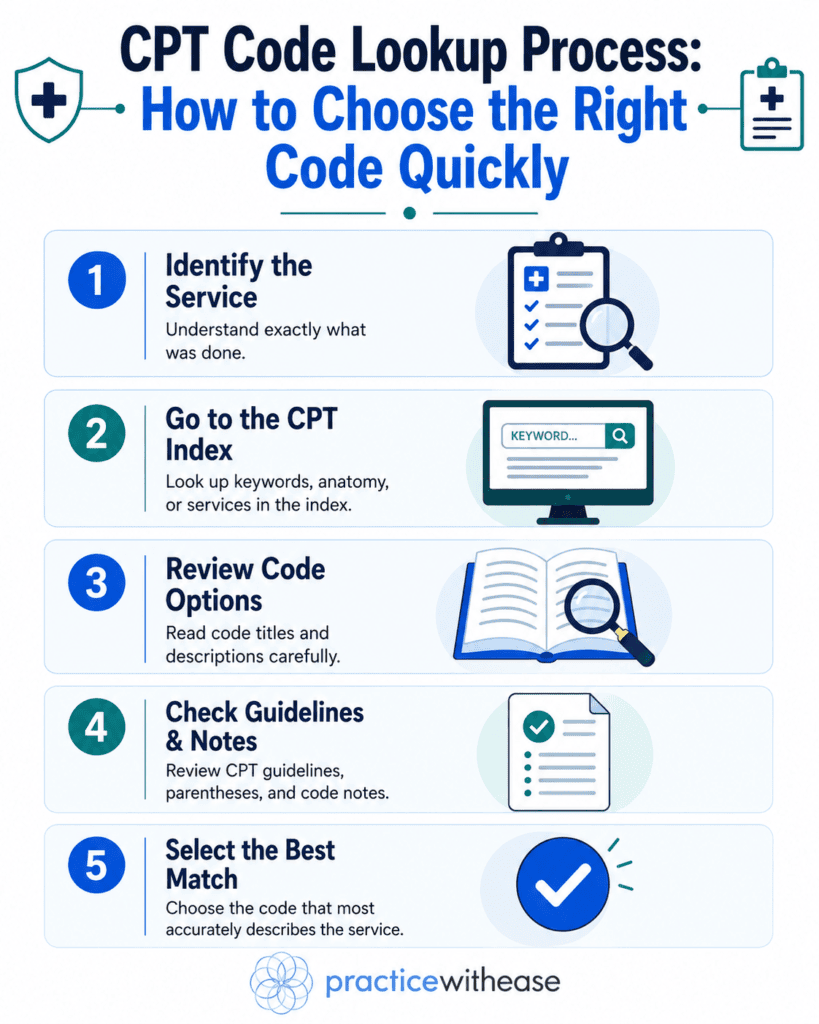
Numerous small practices and clinic teams require a dependable method to choose the correct CPT code without delaying patient care. Practice With Ease helps practices use a simple code-lookup process, match codes to visit notes, and protect the money your work has already earned.
Why CPT Codes Matter in Everyday Billing
Many billers and front-desk staff learn on the job and never get a clear answer to what a CPT code is or why it matters so much. In basic terms, a code is a short number that tells the payer what service was given, such as a visit, test, or minor procedure.
It links the care delivered in the room to a payment rule on the payer’s side. The code is how the payer groups visit and decide how much to pay. If the code does not match the work performed or the note in the chart, the plan may pay less, ask more questions, or return the claim.
Main Ideas Behind CPT Selection
On each claim, your team is turning a real visit into a short story that the payer can read. The visit note explains what happened with the patient. The chosen code turns that story into a number that payers understand and use for payment.
A simple CPT code lookup routine starts with the provider note, then checks the visit type, place of service, and any additional work performed that day. From there, staff can narrow down which code family best fits.
Someone should verify that the code is allowed for the payer and includes any required modifiers to ensure the payment matches the visit.
Common Problems When Choosing Codes
Income often declines from small recurring issues rather than a single mistake. Rushed or unclear code choices can cause unnoticed losses.
- Visit notes are vague, so coders select lower-level codes due to a lack of confidence in selecting higher-level ones.
- Staff rely solely on system or EHR code suggestions rather than reading the full note, which may make codes appear correct but fail to comply with payer rules.
- Payer rules evolve, and without tracking updates, the same code may pay less unnoticed.
- Payments for common visit types aren’t regularly reviewed, so lower rates for the same code can persist for months before being identified.
Practical Tips to Improve CPT Code Lookup
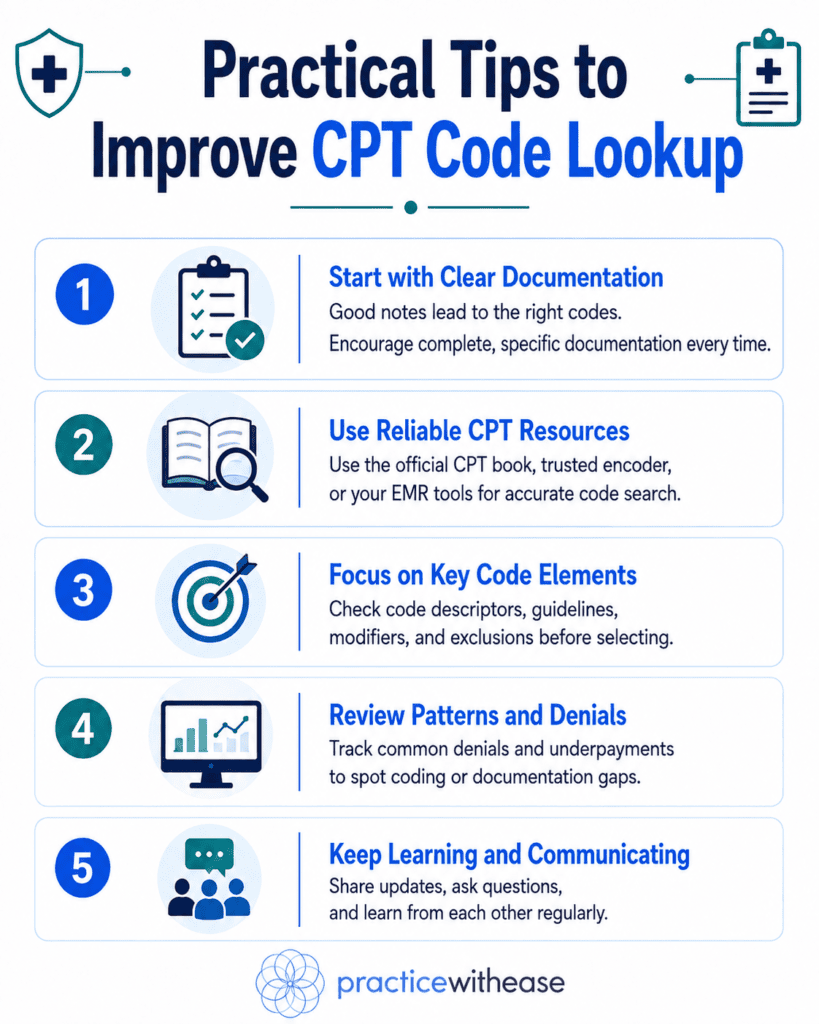
Once your team understands the basic idea of CPT codes, you can build simple habits around them. The goal is not to turn everyone into a coding expert, but to give staff a clear path they can follow on busy days. A steady process makes code lookup easier, faster, and less stressful.
Simple Workflow Practices for Code Selection
Teams that touch claims every day can better control revenue by following a few steady steps. First, they should always read the main visit note before picking a code, so the service comes first and the code comes second.
Using a brief checklist, coders and billers can verify the primary code, any add-on codes, and required modifiers before submitting the claim. Regular short review sessions, in which clinical and billing staff walk through complex visits together, help ensure that documentation aligns with final code selections.
Frequently Asked Questions (FAQs)
What is a CPT code in simple words?
A CPT code is a short number that tells the payer what the doctor or clinic did for the patient, such as a visit, test, or procedure, so they know how much to pay.
How does the right code affect our claims?
When the code fits the visit and notes, the claim is more likely to be paid in full and on time, with fewer denials and fewer calls requesting additional details.
What role does a CPT billing code play for our billing team?
The billing team focuses on the CPT billing code on each claim line. Payment posters map each payment to this code, and follow-up staff use the code and notes to verify it.
Contact Practice With Ease for CPT Support
Practice With Ease helps medical offices and clinics simplify CPT code lookups, making them routine. They review claims, visit patterns, and payer rules to identify coding issues that affect revenue and areas where training can improve outcomes.