


In a busy medical office, medical billing issues can arise quickly. The bigger issue is that common medical coding errors can increase audit risk over time.
Practices often encounter payer denials when the same patterns recur, even when the care was necessary.
This guide covers audit triggers, their origins, and early fixes to prevent stress. Practice With Ease streamlines workflows and reduces audit risk without complicating coding.
Why Audits Happen In The First Place

Audits often begin when a payer notices unusual patterns, such as excessive billing or claims that do not align with the documentation.
A practice may also attract attention when medical billing and coding errors recur, and the payer repeatedly encounters the same missing details. This does not always indicate fraud, but it does mean the payer wants proof, and the practice needs clean records to support the billed charges.
Warning Signs Payers Notice in Claims
Some problems recur, and these coding errors can appear risky when they occur across many claims.
- Billing high-level services too often without strong notes.
- Using the same codes repeatedly without precise visit details.
- Missing required items such as time, history, or medical need.
- Adding services that are not clearly supported in the record.
- Ignoring payer rules that changed during the year.
Documentation Gaps That Create Risk
Strong notes are the main proof of what happened during a visit. When the record is weak, even simple claims can appear uncertain to a payer.
How Weak Notes Lead to Billing Problems
Notes protect the practice by documenting why the service was needed and what work was performed. Medical billing errors occur when notes are too brief, copied from previous visits, or missing key details such as the reason for the visit and the plan.
Even when the provider delivers proper care, weak documentation makes the claim harder to defend and can escalate a simple question into a full review. These issues also arise when staff attempt to code without sufficient detail in the chart, forcing them to guess rather than relying on clear information.
Upcoding Billing Practices
Upcoding occurs when a higher-level code is submitted for billing, but the visit note does not support it. Over time, these common medical coding errors can make a practice appear to bill for more than is documented. Payers may also compare your billing to similar practices. If your patterns differ significantly, the claims may be reviewed more closely. This is not only about money but also about demonstrating a clear medical need and aligning the record with the code.
Steps That Lower Audit Risk
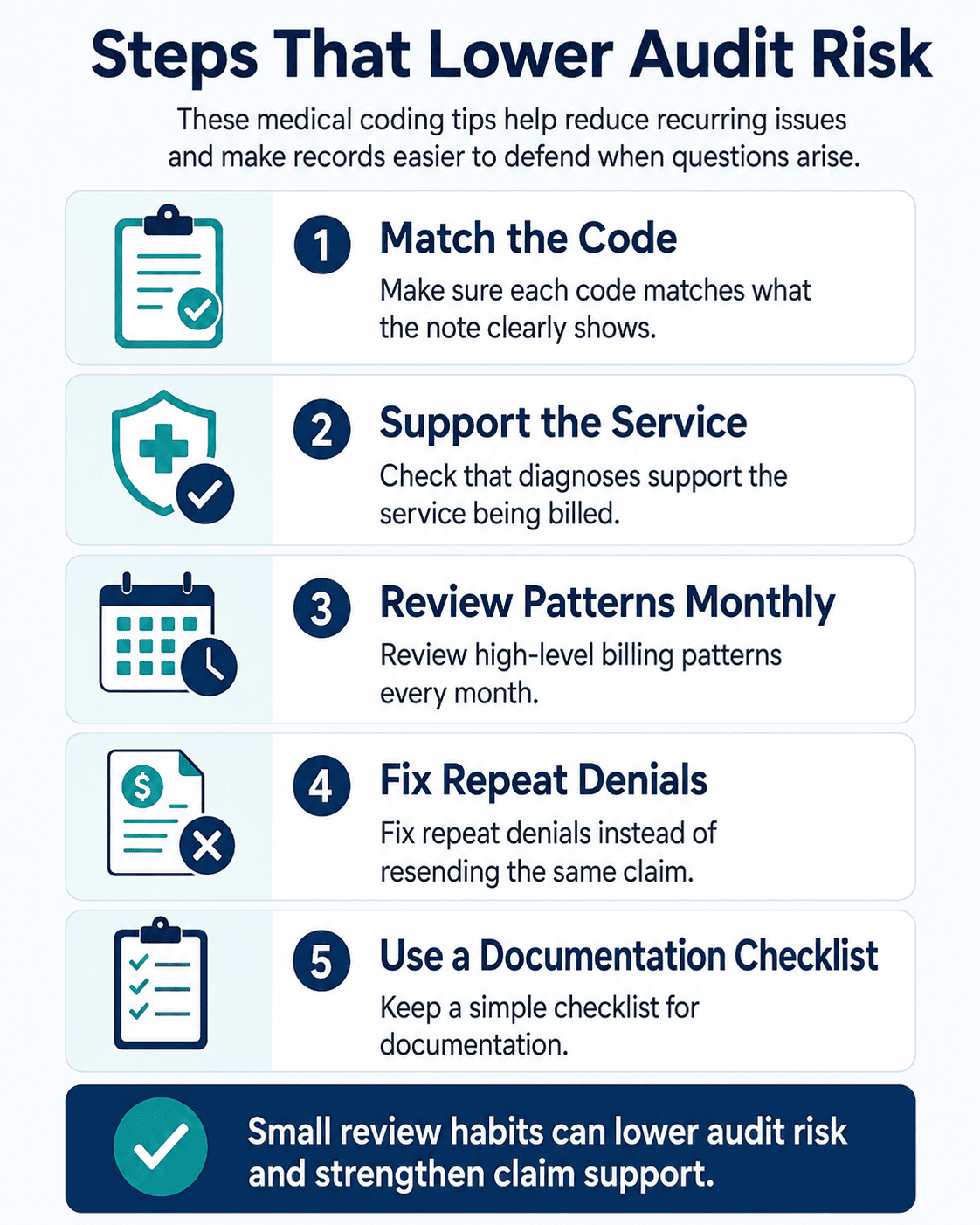
These medical coding tips help reduce recurring issues and make records easier to defend when questions arise.
- Make sure each code matches what the note clearly shows.
- Check that diagnoses support the service being billed.
- Review high-level billing patterns every month.
- Fix repeat denials instead of resending the same claim.
- Keep a simple checklist for documentation.
Frequently Asked Questions (FAQs)
Why do coding errors increase audit risk?
Coding errors can repeat over time. When payers see the same mistakes repeatedly, they may review claims more closely.
Are small coding mistakes really a big problem?
Yes, even small mistakes add up. When they happen often, they can delay payments and raise questions during reviews.
How can a practice lower audit risk?
Clear notes, correct codes, and regular checks help reduce risk. Fixing repeated mistakes early makes a big difference.
When should a practice ask for help with coding?
If denials persist or audits are a concern, it is a good time to review coding practices and seek support.
How Practice With Ease Helps
Practice With Ease supports practices by reducing medical billing and coding errors and improving the processes that lead to cleaner claims. We review workflows, identify recurring trouble spots, and help teams correct common medical coding errors that can increase audit risk. We also use practical medical coding examples during reviews so staff can see what is missing and how to fix it.